Articles & Guides
American Sign Language20 Everyday Communication Concepts to Explore in ASL
Choose useful ASL vocabulary for meals, play, feelings, and everyday needs. Find demonstrations and turn a short list into family conversation.


Educational guide; specialist language review has not been recorded. Learn sign production from the linked language-specific demonstrations and qualified teachers.
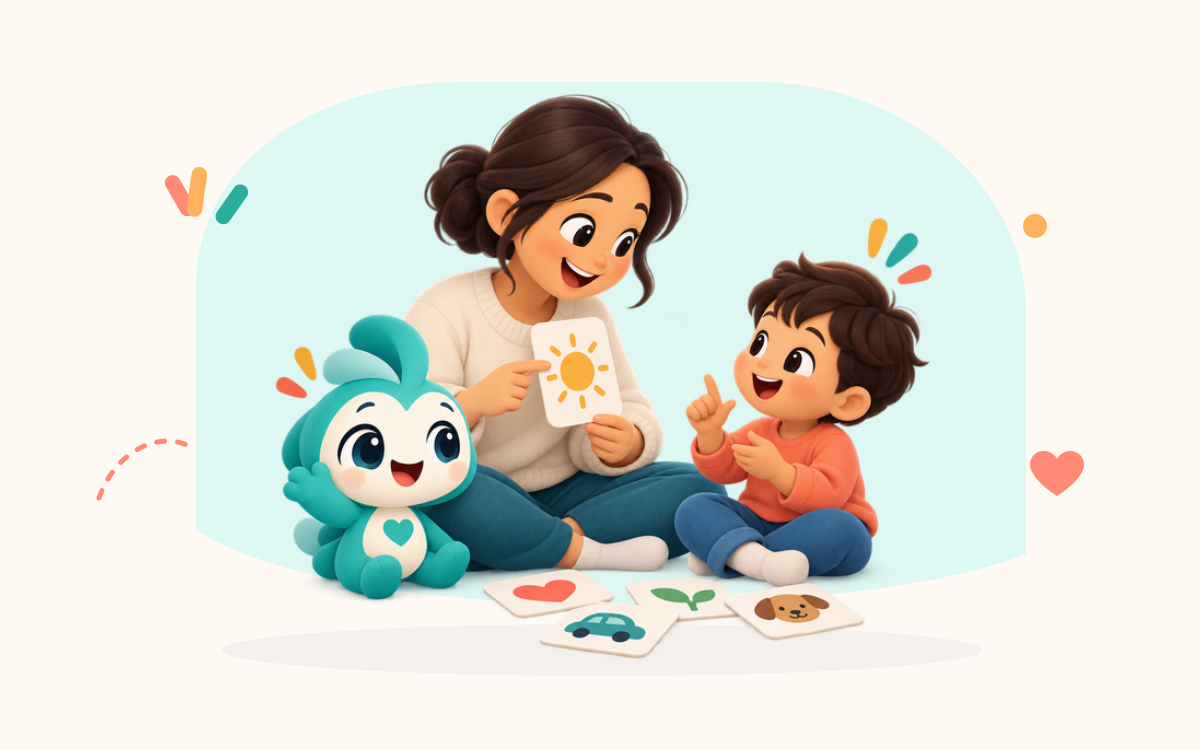
Choose early ASL vocabulary around decisions your child can make: asking for more, finishing a snack, refusing an offer or getting help with a toy. The names of foods and objects matter, and so do the messages that let your child change what happens next.
The 20 concepts below are a menu for ASL practice. Choose the ones that fit your family; there is no age target for completing the list. If your child uses another signed language, use sources from that community.
A starting list to make your own
| Family moment | Concepts to learn in ASL | A way to use them |
|---|---|---|
| Meals and drinks | Eat, drink, water, milk | Offer a choice and talk about what is happening. |
| Choices and requests | More, finished, help, stop | Let your child continue, end, or change an activity. |
| Responses and care | Yes, no, toilet, wash | Include preferences and familiar care routines. |
| Play and rest | Play, book, ball, sleep | Follow a favourite activity and notice when a break is wanted. |
| Feelings and connection | Hurt, happy, sad, love | Make room for feelings as well as practical requests. |
Adapt the list to your family. A child who loves toy buses may have more reason to learn about buses than balls. A different caregiver label, food, or favourite book may matter more than one of the suggestions above.
These English labels describe meanings to look up. They are not instructions for handshape, movement, or ASL sentence order. ASL University's video dictionary and lessons provide demonstrations; ask an ASL teacher which form and usage fit your intended meaning.
American Sign Language
What could we say here?
The article offers 20 communication concepts. Choose one situation and start with the few that have a purpose there.
At the table
A meal can include choices, preferences and refusals—not just requests for more.
More / finished
Help / different
Like / do not like

One question for your teacher
Which ASL expressions fit these intentions in a real mealtime exchange?
Try three ordinary situations
A snack with choices
Prepare the vocabulary before the snack. Place the choices where both of you can see them, use the expressions you have learned, and leave space for a response. Respond to pointing, signing, facial expression, or another clear attempt to communicate. Offer food normally; it does not need to become a reward for producing a sign.
A game that can change
During a simple ball game, practise messages about playing, wanting more, needing help, or stopping. When your child wants to stop, respect the message. If you cannot understand a response, pause and work it out rather than continuing your planned sequence.
A picture book without a finish line
Choose a familiar book and learn a few relevant expressions before sitting down together. Follow the page or character that interests your child. You do not need to translate every printed word to make this a shared moment. The American Society for Deaf Children resource directory includes signed stories you can explore together.
Share the context with other caregivers
Send grandparents and other caregivers the demonstration link with a note about its purpose: “We are learning how to offer help opening this box.” If a teacher or Deaf family member uses a different form, ask about its meaning and local use before treating either version as wrong.
A useful vocabulary list leaves room for the child
Choose concepts from each area so practice includes more than adult instructions.
Needs
Something to eat, help with a lid, a rest or a clear finish.
Choices
This one, that one, something different—or no.
Feelings and noticing
Something funny, surprising, uncomfortable or worth sharing.
Let one concept do more than one job
Take “help” as a practice question for the adults. You might want to ask for help opening a toy box, offer help to someone else, or understand that help is being refused. These are different intentions; a single vocabulary label does not show you how to express every one.
Ask an ASL teacher how to express each intention, then try one when the toy box is out. Your child might accept, refuse or suggest another way to open it. Keep that context with the demonstration link so the next caregiver knows what you were trying to say.
Common questions
Should we practise all 20 at once?
No. Pick a small set that fits one routine. Add more when they have a purpose. The list is a menu of ideas, not an assignment to complete by a certain age.
What if my child does not copy the sign?
Keep the interaction responsive and avoid repeated testing. Notice what your child is communicating in the ways available to them. Ask your child's language-support team about their individual progress if you have concerns.
Can a printable chart replace video examples?
A chart can remind you what to practise. For learning how a sign is produced and used, pair it with a reliable demonstration and feedback. A still image may not show the full movement or expression you need to observe.
Choose two concepts for the next snack
Before your next snack or game, choose two concepts from the table and save their demonstrations. Use them when the situation calls for them. Find more family practice ideas in SonaSteps' ASL path.
Sources and learning links
Make this part of your everyday
Explore family learning ideas at your own pace, starting with a moment that matters to you.
Explore family learningResource Center
Keep exploring
More small steps for learning and connecting together.
Articles & Guides · ASL
How to Learn ASL as a Parent: A Practical Starting Guide
Start learning ASL with a practical family plan: choose reliable lessons, build everyday routines, find feedback, and set realistic expectations.
Read the guide
Articles & Guides · ASL
ASL Alphabet for Beginners: A Family Guide to Fingerspelling
Learn what the ASL alphabet is for, find reliable demonstrations, and practise fingerspelling with names and familiar words at your family's pace.
Read the guide
Articles & Guides · ASL
Baby Sign Language and ASL: How Families Can Get Started
Understand baby-sign resources and full ASL learning, choose useful family routines, and find support for communicating with a deaf or hard-of-hearing baby.
Read the guide